
If you feel like you're losing your teen to a screen, you aren't alone.
In an era where AI can write essays, curate social feeds, and simulate conversation, many parents are beginning to ask an important question:
What still creates real human connection?
At Teen Next Step, we use advanced technology to power our system. Our assessments are fast, our dashboards are efficient, and our data provides immediate insight.
But we believe something very important:
Technology can reveal patterns.
Only people can help create alignment.
That's why our system was designed to combine the speed and precision of modern technology with the guidance, perspective, and real-world understanding that only experienced humans can provide.
1. Data vs. Human Understanding
AI can identify trends, scoring patterns, and areas that may need attention.
But it cannot fully understand family dynamics, emotional nuance, personal history, or the unspoken tension that may exist between a parent and teen.
Our Parent-Teen Alignment System uses technology to uncover potential gaps in:
- Direction
- Readiness
- Communication
- Motivation
- Priorities
- Confidence
- Responsibility
- Education Awareness
- Career Awareness
- Emotional Support
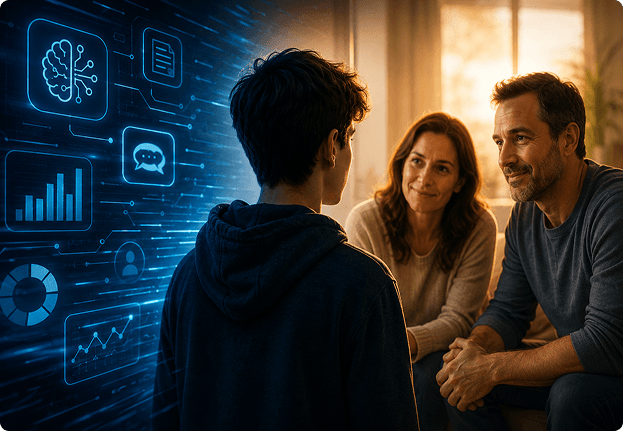
From there, our live Alignment Specialists help families navigate those realities constructively through real human interaction.
Technology helps reveal the information.
Human guidance helps families understand what to do with it.
2. Technology Should Support Families – Not Replace Them
At Teen Next Step, technology exists to support the process — not replace human connection.
We use technology to handle the administrative side of the system, including:
- Assessments
- Score calculations
- Dashboards
- Progress tracking
- Organization
- Reporting
This allows our Alignment Specialists to focus their attention where it matters most:
The parent.
The teen.
The relationship between them.
The goal is not more automation.
The goal is more meaningful interaction.
3. The Human Element Still Matters
As the world becomes increasingly digital, genuine human guidance becomes more valuable — not less.
Teens still need:
- mentorship
- communication
- emotional support
- accountability
- direction
Parents still need:
- clarity
- perspective
- structure
- guidance
- confidence in next-step decisions
Technology can provide information.
But real alignment often requires conversation, perspective, accountability, trust, and emotional awareness — things that cannot be fully automated.
Why This Matters More Than Ever
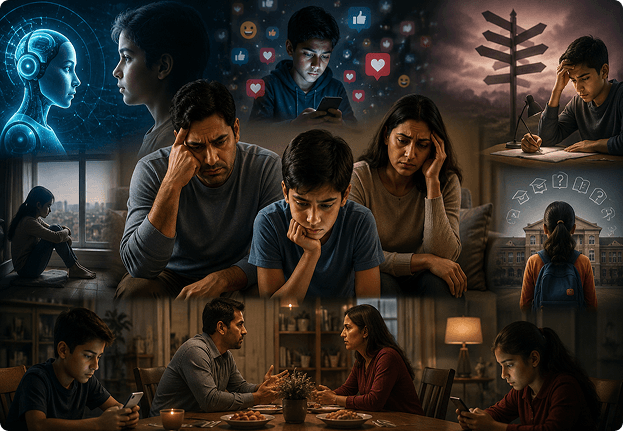
Many parents today are trying to navigate:
- AI influence
- social media overload
- confusion around career direction
- emotional disconnection
- educational uncertainty
- increasing communication gaps within the family
At the same time, many teens appear confident externally while internally lacking structure, readiness, direction, or clarity about what comes next.
That's where structured parent-teen alignment becomes valuable.
Not to control teens.
But to help families communicate more effectively before major educational, career, and life decisions are made.
The Bottom Line
Teen Next Step is not building a system to replace parents or human connection.
We've built a structured, technology-powered framework designed to help families reconnect, communicate more effectively, and move forward with greater clarity and alignment.
Our system combines the efficiency of modern technology with something many families feel is disappearing:
Real human guidance.
